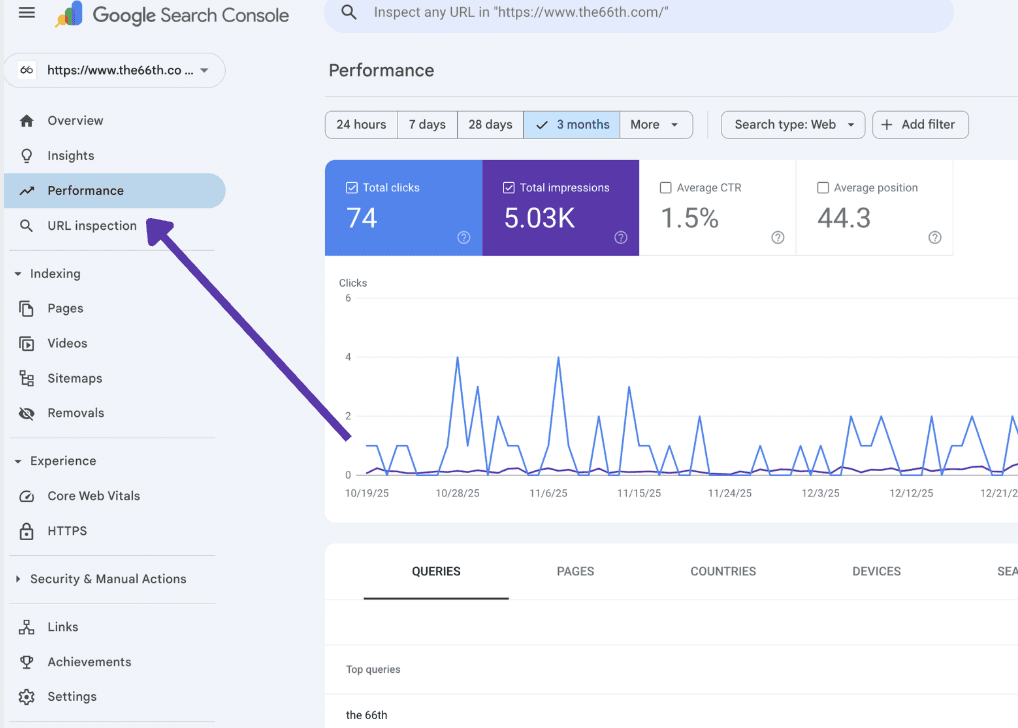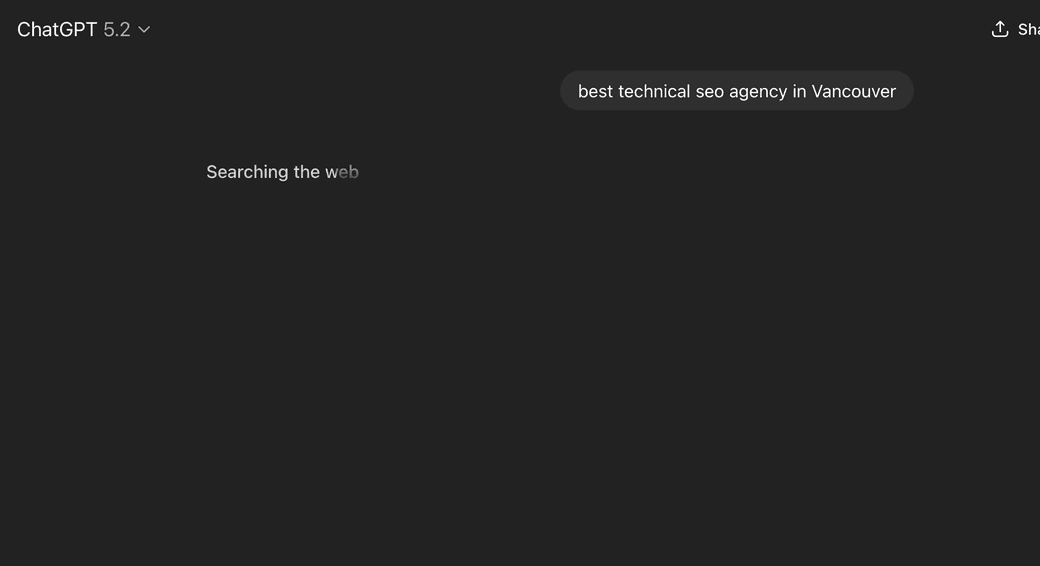
1 of our clients had no presence in AI search results. Their product was strong, their website was live, and they were spending on ads. When someone asked ChatGPT for a recommendation in their category, our client's name did not come up.
We added review management to their GEO strategy. 2 weeks later, they were generating sales from ChatGPT.
No new pages were published. No technical SEO changes were made. The shift came entirely from how their review profile read across platforms.
That result is what most content about Google reviews misses. Reviews are not just a reputation signal. They are a ranking input for both traditional search and AI recommendation systems. Managing them the same way you manage your website is the practical implication of that.
What Google Actually Reads in Your Review Profile
Google tracks 4 distinct signals when evaluating a business profile: volume, rating, recency, and velocity.
Volume is how many reviews you have in total. Rating is your average star score, with 4.0 as a threshold below which visibility drops. Recency is how recently reviews came in. Velocity is the pace at which they arrive over time.
A profile with 200 reviews collected over 5 years reads differently to Google than a profile with 200 reviews collected over the last 12 months. Recency and velocity carry as much weight as the total count.
AetherHaus, a sauna and cold plunge studio in Vancouver, came to us with zero organic traffic. We built their keyword architecture, published content, and managed their technical SEO. When they hit position 1 for "cold plunge Vancouver" and position 5 for "ice bath and sauna," their revenue increased 50% within 2 weeks.
That result was not just from the ranking. Their review profile had strong velocity, a consistent 4.9 rating, and responses on nearly every review. That combination told Google this was an active, trusted business. The traffic that followed was high-intent. People searching "cold plunge Vancouver" are not browsing. They are ready to book.
Organic search accounts for 47% of all trackable website traffic, more than ads, social, and email combined (BrightLocal, 2025). For local businesses, the review profile is 1 of the most direct levers on whether that traffic finds you or your competitor. This is especially true in trust-heavy categories like dental practices, where review velocity is part of the same engine that drives ranking.
The AI Layer Most Businesses Have Not Thought About
25% of Google searches now show an AI Overview, up from 13% 6 months ago (Conductor, Q1 2026). Traffic from AI tools to websites grew over 500% in 2025 (Previsible, 2025).
AI systems like ChatGPT, Perplexity, and Google's AI Overviews are increasingly where people go for local recommendations. These systems do not just index your website. They characterise your brand from every signal available to them: your content, your citations, your structured data, and your reviews.
The language patterns in your reviews are part of that characterisation.
A business with reviews that consistently use phrases like "infrared sauna," "Aufguss ritual," and "cold plunge recovery" gets characterised differently by an AI model than a business whose reviews all say "great experience, highly recommend." The specific language tells the model what the business actually does and who it serves. Generic reviews tell it almost nothing.
This is why we include review management on every GEO deliverables list we produce. Not as an optional add-on. As a core signal layer. GEO is 80% really good SEO and 20% entity management, citation building, and structured review signals. The reviews piece is not separable from the search strategy.
What Managing Reviews Actually Means
This is not about asking customers for 5 stars. That is the surface level.
Managing reviews as a search asset comes down to 4 things.
Velocity
A consistent flow of new reviews, not a burst followed by 6 months of nothing. A profile that goes quiet signals to Google that business activity has slowed. The system is always reading recency. The businesses that win in local search over the long term are not the ones who ran a 1-time review push. They are the ones who built a repeatable process for asking every customer.
Response Quality
Responding to reviews keeps your profile active. But the language in your responses also matters. When a customer mentions a specific service and your response acknowledges it naturally, you are reinforcing the keyword context around your business. A response that says "glad you enjoyed the Aufguss session" does more search work than "thanks so much, see you again."
This applies to AI characterisation too. The language you use in responses is part of the full-text signal these systems read across your profile.
Sentiment Consistency Across Platforms
What customers say about you on Google, Yelp, TripAdvisor, and Facebook should tell a coherent story about what you do and who you serve. Inconsistency across platforms creates noise in how AI systems characterise your brand. Coherence builds entity authority.
This is not something you can manufacture. It comes from delivering a consistent experience and giving customers a clear frame for how to describe it when they leave a review.
The Negative Review Response
Most businesses either ignore negative reviews or respond defensively. A well-handled negative review, one that is acknowledged, addressed, and resolved clearly, is often a stronger trust signal than 10 positive ones. AI systems read that pattern. So do prospective customers who are comparing you with a competitor before they book.
The 3-Question Audit
If you have not looked at your review profile as a search asset before, start with 3 questions.
When did your last review come in? If it was more than 6 weeks ago, you have a velocity problem. Google is reading your profile as less active than a competitor who received a review last week.
What is your response rate? A profile with 80 reviews and 2 responses is leaving an active engagement signal on the table. Responding to reviews is a signal Google weighs directly when evaluating business activity.
Do your recent reviews mention the specific services you want to rank for? If they all say "great place" without specifics, the keyword context your profile needs is not there. Customers do not naturally provide it. You have to prompt it through the experience you deliver and through how you ask.
Those 3 data points tell you where the gap is and which lever to pull first.
The businesses winning in local search right now are not just the ones with the most reviews. They are the ones treating the review profile as living infrastructure, managed actively and consistently, the same way they manage their website.
Your competitors are probably not doing this. Most businesses collect reviews passively and respond occasionally. The gap between passive and active review management is a ranking gap. In local markets, those gaps are measurable in revenue within weeks, not months.
Reviews are not social proof that sits on your profile. They are a compounding search signal. The earlier you start managing them as one, the more they compound.
We manage review and local SEO programmes for businesses across Canada. If you are in Toronto, Calgary, Edmonton, Ottawa, or Montreal, see how we work in your market.
Liam Lytton is the founder of The 66th, an SEO and GEO agency in Vancouver that has driven results including 1,500% organic traffic growth, 5x revenue, and 4x lead volume for clients across North America. Book a free call →